

Key takeaways
- Chunyun 2026 runs for 40 days: from February 2 to March 13; the official Spring Festival holiday is February 15–23, 2026.
- Strategy #1: plan departure/return windows around peak days and add buffer time for stations, security checks, and transfers.
- Strategy #2: keep 2–3 backup routes (different date, station, airport, or an overnight transfer city).
- Prices often rise on popular routes and peak dates: compare nearby days, consider alternative hubs, and book accommodation with clear cancellation terms.
- What stays open: transport and essential services keep running, while many public offices, campus services, and small businesses switch to reduced schedules.
Context
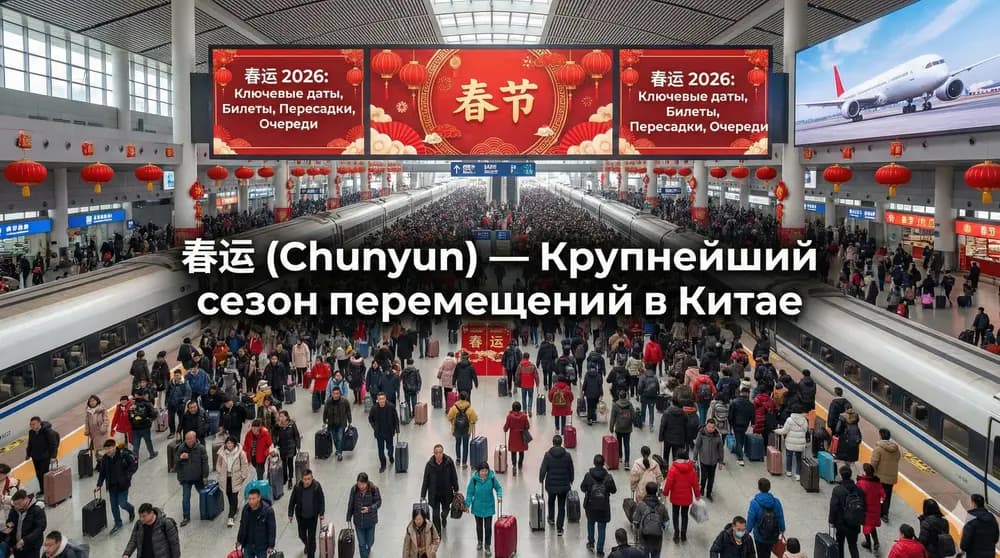
Chunyun 2026 (春运) is the Spring Festival travel rush when people return home, travel for leisure, and then move back to study and work hubs. For travelers, students, and families, it’s a real-world stress test: tickets sell fast, stations get crowded, and familiar services may operate on duty rosters.
In 2026, major sources describe a 40-day period from February 2 to March 13 and an extended Spring Festival break on February 15–23, which can amplify pressure on transport and push up prices on popular routes.
If you already published a Spring Festival traditions guide, this article is the practical continuation: how to actually move around China during the busiest season.
Main guide
1) 2026 calendar: where the real peaks happen
Peak congestion usually clusters around the days right before the official holiday starts and the wave of returns after it ends. Even if you don’t travel on the exact peak dates, congestion can linger due to schedule shifts, weather, and local events.
- Official Spring Festival holiday: February 15–23, 2026.
- Chunyun (40 days): February 2 — March 13, 2026.
2) Tickets: think in scenarios, not a single “perfect” option
During Chunyun, the practical advantage comes from having alternatives. Build 2–3 routes in advance.
- Trains: check different stations within the same city (when applicable) and nearby satellite cities.
- Flights: compare regional airports and departure dates ±1–2 days.
- Hybrid routes: train to a major hub + flight (or the reverse) can be faster and sometimes cheaper on peak dates.
For students: if you’re returning to campus, confirm dorm check-in rules, dining hall access, and office hours—these can vary by department.
3) Logistics: time, transfers, and buffers
Add extra time for:
- entry control and security lines at stations/airports;
- long walks between platforms/terminals;
- unpredictable delays caused by capacity and weather.
Rule of thumb: make critical transfers “thick” (with margin), or plan an overnight stop in your transfer city.
4) Prices: how to avoid peak-season overpaying
During Chunyun, transport and accommodation often cost more on “obvious” peak days and popular routes. Helpful tactics include:
- Date flexibility: shifting by one day can make a real difference.
- Route flexibility: fly/train to an alternative hub, then use ground transport to your final city.
- Smart cancellation: choose fares/hotels with clear refund or change rules if your plans might move.
5) What stays open (and what you should verify)
General rule: essential infrastructure keeps running, but schedules can be reduced.
- Typically open: stations/airports, transport systems, many large retailers, and parts of delivery networks (with constraints).
- Often reduced/closed: public offices, many campus services, some bank branches, and small businesses.
Best practice: check your specific organization’s announcements (university, clinic, visa center, office) and save a screenshot of the schedule.
Context
Definition: Chunyun (春运) is China’s Spring Festival travel rush—a coordinated 40-day travel season around Lunar New Year.
Fast plan: (1) lock key dates, (2) build 2–3 routes, (3) book accommodation with clear cancellation, (4) keep time and budget buffers.
Practical steps: checklists and scenarios
Checklist 7–10 days before departure
- Identify non-negotiables: exams, work shifts, dorm check-in dates.
- Build 2–3 routes: ideal, realistic, emergency.
- Book cancellable accommodation if transfers or delays are likely.
- Save offline: IDs, addresses in Chinese, contacts, reservations.
- Prepare payment: card + cash + a backup method (if you rely on mobile payments, confirm access and limits).
On the travel day
- Arrive early: entry/security lines can be much longer than usual.
- Food/water/power bank: waiting time can be unpredictable.
- Keep buffers: transfer windows should be generous, especially when changing stations/airports.
If tickets are sold out
- Check nearby dates (±1–2 days) and alternative stations/airports.
- Use hybrid routing: train to a hub + flight (or the reverse).
- For groups or families: splitting into two legs with an overnight stop can be more reliable.
Extra notes for students
- Confirm campus-specific schedules: offices, dorm rules, dining services.
- If you’re an international student: keep original documents and copies accessible during intercity travel.
- When returning after the holiday: arrive with buffer days before classes restart.
 Chunyun crowds can be intense—build time buffers into your plan.
 Prepare 2–3 alternative routes ahead of time.
 Offline documents, snacks, and a power bank are a minimum for peak days.
Ticket sales and endorsement services from 5:00 to 1:00 the next day.
— China Railway 12306 (official site)
FAQ
What are the Chunyun 2026 dates, and when is the official Spring Festival holiday?
Chunyun 2026 runs for 40 days: February 2 — March 13, 2026. The official Spring Festival holiday is February 15–23, 2026.
When should I travel to avoid the worst congestion?
If you have flexibility, avoid the obvious peak dates right before the official holiday begins and right after it ends. Shifting by 1–2 days often reduces crowds and cost.
What if train or flight tickets are sold out?
Check nearby dates (±1–2 days), alternative stations/airports, and hybrid routes (train to a hub + flight or the reverse). Keep an emergency plan that includes an overnight transfer city.
What typically stays open during the holiday, and what may be closed?
Transport infrastructure usually keeps running, while many public offices, campus services, and some bank branches or small businesses may operate reduced hours. Always verify the schedule of your specific organization.
How can I avoid peak-season overpaying?
Date flexibility, route flexibility, and booking with clear cancellation terms help. Plan a budget buffer and compare options across multiple services.
What are the essential documents and items for travel during Chunyun?
Original documents (and copies), offline addresses and contacts, a charger/power bank, water/snacks, cash, and a backup payment method. Peak-day waiting time can be longer than usual.
Next steps
If you’re preparing for the holiday season in China, start with culture and language, then move to logistics.
- Chinese New Year (Spring Festival) traditions: a complete guide
- Explore study and travel programs
- Contact us