
Key takeaways: Chinese New Year traditions
- 春节 (Chūnjié) is the Spring Festival: the most important family holiday, centered on reunion, respect for elders, and renewal.
- Chinese New Year traditions commonly include pre-holiday cleaning, red decorations, a reunion dinner on New Year’s Eve, visits and greetings, and the Lantern Festival (元宵节).
- Customs vary widely by region, but the core symbolism repeats: good luck, prosperity, health, and safety.
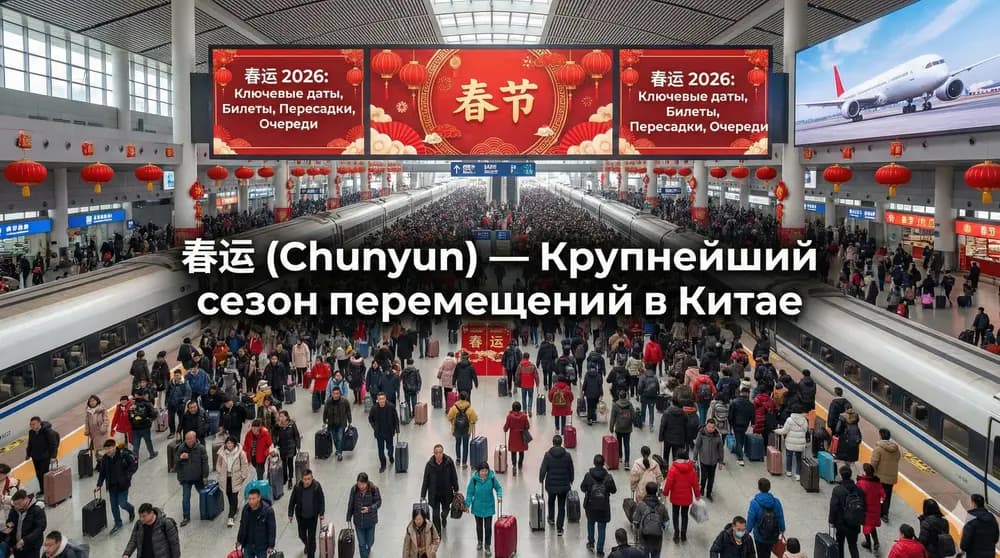
- For travelers, the peak travel season 春运 can affect prices, availability, and logistics—plan ahead.
- The most useful approach for non-native speakers: learn a few key greetings, respect basic taboos, and follow simple gift etiquette.
Context: why 春节 matters so much
Chinese New Year traditions have developed over centuries as a cultural “reset”: closing the old year, strengthening family ties, and welcoming a new cycle with symbolic actions that express hopes for luck and well-being.
Two ideas matter most. First, it is a family holiday: many people travel home, gather with relatives, and visit elders. Second, it is a holiday of meaningful symbols: the color red, lanterns, couplets (春联), specific foods, and even the wording of greetings all function as shared cultural signals.
If you are learning Chinese, 春节 is a perfect real-life language theme: greetings, small talk, gift etiquette, and cultural vocabulary. If you are in China during this period, basic cultural fluency makes everyday interactions easier and warmer.
Main guide: rituals, symbols, and meanings
What the holiday is called and what it means
In China, Chinese New Year is most commonly called 春节 (Chūnjié, Spring Festival). Internationally you may also hear “Lunar New Year.” The core idea is renewal: “spring” is both seasonal and symbolic—a fresh start for family, work, and life.
Red, lanterns, and door couplets 春联
Red is strongly associated with joy and protection from misfortune, which is why you see red lanterns, paper cuttings, knots, and especially 春联: paired calligraphy lines placed on both sides of the door (plus a horizontal banner above). It is not just decoration—it is a public wish for the household.
Cleaning before the holiday and “taboos” in the first days
Before the festival, many families do a deep clean to symbolically remove the old. In the early days of the new year, some people avoid taking out trash or sweeping to avoid “sweeping away luck.” In practice this varies, but the cultural logic is widely recognized.
New Year’s Eve: the reunion dinner 团圆饭
The heart of the holiday is the 团圆饭 (tuányuán fàn), the reunion dinner on New Year’s Eve. Families cook, share stories, watch festive shows, and exchange good wishes. If you are invited, a small gift (fruit, sweets, tea) and a sincere greeting go a long way.
Hongbao 红包: how red envelopes work
红包 (hóngbāo) are symbolic money gifts. The meaning is the wish for prosperity, not the exact amount. Today, digital versions are common, but the idea remains: elders often give to children; families and workplaces have their own patterns. If you are unsure, do not initiate money gifts—ask a close Chinese friend about the specific family’s norms.
Food as a language of symbolism
Many foods are chosen for sound associations and lucky meanings. For example, fish (鱼 yú) sounds like “surplus” (余 yú), so “may you have abundance” becomes both a phrase and a dish. Dumplings (饺子 jiǎozi) in northern China can resemble old-style ingots, and sticky rice cake (年糕 niángāo) echoes the idea of “higher every year.” Regional menus differ, but the symbolic principle repeats.
Visits, greetings, and social harmony
Festival days often include visiting relatives, bringing small gifts, and using positive, respectful language. It is a time to maintain harmony: avoid criticism, avoid heated debates, and focus on gratitude and good wishes. This “soft etiquette” matters as much as any specific ritual.
Lantern Festival 元宵节: a bright ending to the season
The cycle traditionally culminates around day 15 with the 元宵节 (Yuánxiāo jié, Lantern Festival). Lantern displays, performances, and sweet rice balls (汤圆 tāngyuán / 元宵 yuánxiāo depending on region) emphasize unity and completeness. For learners, it is a rich cultural storyline: light, reunion, and circular shapes as symbols of wholeness.
A simple timeline (general pattern)
| Period | What people often do | Why it matters |
|---|---|---|
| Before the festival | Cleaning, shopping, decorations, gift preparation | Close the old year and prepare a “lucky start” |
| New Year’s Eve | Reunion dinner, family rituals, greetings | Reunion, gratitude, opening the new cycle |
| Days 1–3 | Greetings, visits, light “taboos” | Protect harmony and symbolically “keep luck” |
| During the week | Meetups, gifts, cultural events | Social bonds and relationship maintenance |
| Day 15 | Lantern Festival, lanterns, sweets | Beautiful closure and a symbol of completeness |
Regional differences are normal
A common beginner mistake is searching for one “correct” version. China is vast: north vs south, urban vs rural, dialect regions, and family customs differ. If what you see does not match what you read, it is usually a local tradition—not an error.
Context
Simple definition to remember: Chinese New Year traditions are a set of practices that “close” the old year and “open” the new one through family reunion, symbolic actions (red, decorations, auspicious words), and relationship harmony.
Practical takeaway: you do not need every detail—respect the meaning (family, luck, tact) and avoid basic social missteps.
Practical steps: what to do (and what to avoid)
Checklist for travelers and students
- Plan early: transport and accommodation may be limited or more expensive due to peak travel (春运).
- Learn 5 core greetings and practice pronunciation (see below).
- Prepare a small host gift for visits: fruit, sweets, tea, or a modest souvenir.
- Carry some small cash for practical needs, but do not initiate hongbao unless you know the household norm.
- Respect family time: New Year’s Eve and day one are often reserved for close family.
Safe gift options
- Fruit (nicely packaged), sweets, nuts.
- Good tea (if you know preferences).
- A neutral souvenir from your country.
Better to avoid overly personal gifts, extremely expensive items, or symbolic objects you do not understand in context.
Basic taboos (keep it simple)
- Avoid negative or “unlucky” jokes in greetings.
- Do not show up empty-handed when visiting a family (small is enough).
- If you are unsure, ask politely in advance—it reads as respect.
7 phrases that work in real life
- 新年快乐 (Xīnnián kuàilè) — Happy New Year!
- 恭喜发财 (Gōngxǐ fācái) — Wishing you prosperity!
- 万事如意 (Wànshì rúyì) — May everything go your way!
- 身体健康 (Shēntǐ jiànkāng) — Wishing you good health!
- 阖家幸福 (Héjiā xìngfú) — Happiness to the whole family!
- 一路平安 (Yílù píng'ān) — Safe travels!
- 谢谢招待 (Xièxie zhāodài) — Thank you for hosting!
A simple way to celebrate outside China
- Add a small red accent and one lantern (or a paper-cut decoration).
- Host a “reunion dinner” at home: one symbolic dish and tea.
- Send a short greeting to Chinese friends using one or two Chinese phrases.
- Watch one cultural video and write down 10 theme words.
- Finish with a “lantern night”: make a paper lantern with kids or do a family tea session.
For parents: a 10–30 minute activity
- Make a red card with the character 福 (fú, “good fortune”).
- Role-play a “gift shop”: choose 3 gifts and say 3 wishes.
- Build a mini vocabulary list: lantern 灯笼, New Year 新年, luck 福, family 家.
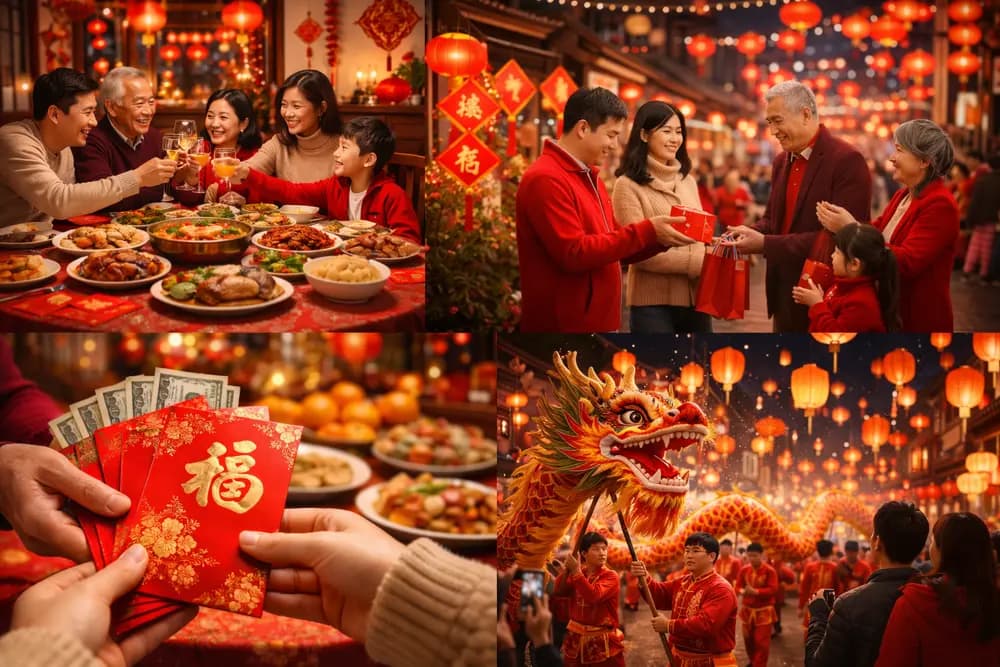
 Red and lanterns are among the most recognizable symbols of 春节.
 团圆饭 is the emotional center of the holiday: the family gathers together.
 Hongbao are symbolic wishes for prosperity and good luck.
 Public performances highlight the joyful, community side of the festival.
一年之计在于春。
— Chinese proverb (meaning: “A year’s plan begins in spring”)
Further reading and sources
- Eduventure News — More learner-friendly content about language, culture, and practical life in China.
FAQ
When is Chinese New Year, and why does the date change?
The date follows the traditional lunisolar calendar, so it falls between late January and mid-February. In China, the holiday is most commonly called 春节 (Spring Festival).
Do I need to give hongbao if I’m a foreigner?
If you are unsure about a family’s rules, it is safer not to initiate money gifts. Bring a small universal host gift (fruit, sweets, tea) and offer warm greetings. If close Chinese friends advise that hongbao is appropriate, follow their guidance.
What is a good gift to bring to a Chinese family during the festival?
Common safe options include fruit, sweets, nuts, tea, or a neutral souvenir from your country. Polite packaging and a respectful tone matter more than price.
Which Chinese New Year traditions matter most for understanding the holiday?
Three pillars: the reunion dinner, greetings and visits (relationship maintenance), and auspicious symbolism (red, decorations, positive words). Everything else varies by region and family.
Are there strict taboos I should worry about?
You do not need to overthink it. Avoid negative phrasing, stay tactful, do not argue, and respect household routines. If unsure, ask politely in advance—this is usually appreciated.
How can I congratulate someone in Chinese if I’m a beginner?
The easiest option is 新年快乐 (Xīnnián kuàilè). For an extra warm touch, add 万事如意 (Wànshì rúyì) and 身体健康 (Shēntǐ jiànkāng).
Want to learn Chinese through culture and real-life scenarios?
Eduventure curates practical materials: cultural explanations, ready-to-use phrases, travel and study checklists, and learner-friendly guides. Explore programs or start with courses in your dashboard.