

Key takeaways
- Baguang Heritiera Wetland Park shows Shenzhen not only as a technology hub, but also as a city of nature, history, and eco-education.
- On April 18, 23 international students from Shenzhen University visited the park in Dapeng New Area for ecological observation and a cultural tour.
- The route included mangrove ecology, ancient looking-glass mangroves, Yanzao Ancient Village, and the coastal tidal zone.
- Official sources describe the local Heritiera littoralis community as the most complete and oldest natural community of its kind in the world.
- For international students, field trips like this turn studying in China into lived experience: language, culture, ecology, and the city come together beyond the classroom.
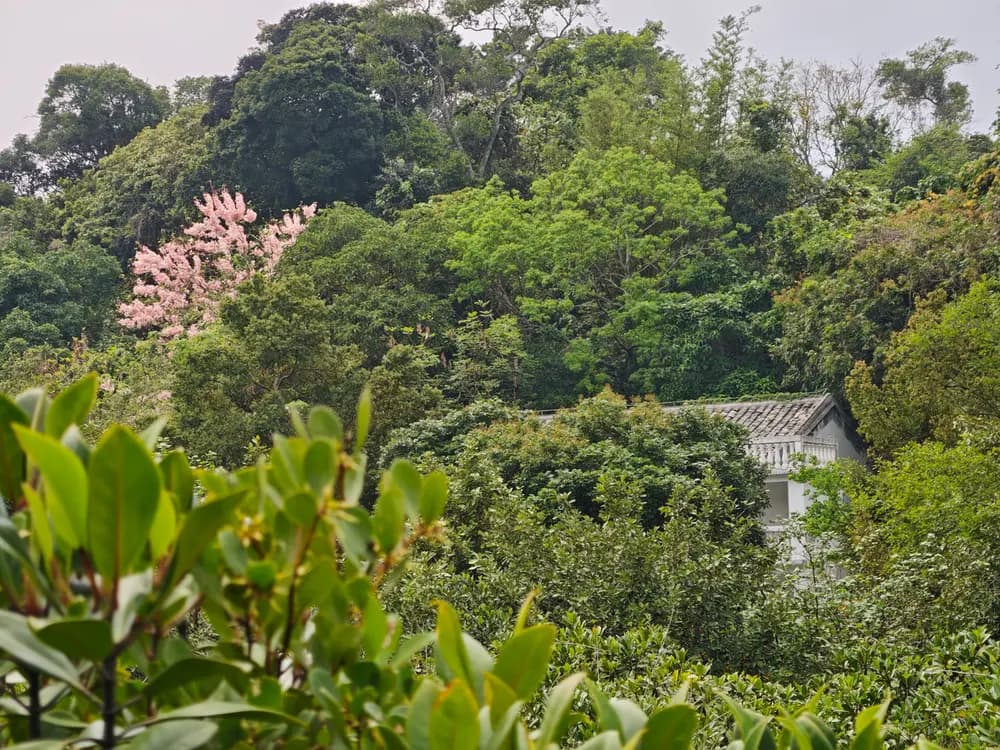
Context: another image of Shenzhen
When many foreigners hear the name “Shenzhen,” they often think of technology, skyscrapers, high-speed transport, and the fast rhythm of a modern city. But Shenzhen is not only about innovation. It is also a city with rich natural spaces, coastal ecosystems, and historical places.
Ahead of Earth Day, Shenzhen University invited a group of international students to visit Baguang Heritiera Wetland Park in Dapeng New Area. According to the College of International Exchange of Shenzhen University, 23 international students took part in ecological observation and a cultural tour on April 18.
For Eduventure, this example matters because it shows that education in China can be academic, field-based, cross-cultural, and environmentally aware at the same time.
Main story: nature, history, and learning in one route
An ecological walk through Baguang Heritiera Wetland Park
The first part of the route took students through the forest and wetland area of the park. They were accompanied by Baguang Nature School and local volunteers. The tour was guided by Ou Wei, vice principal of the Baguang Nature School. Walking along the wooden boardwalk, participants observed the coastal ecosystem up close: wet soil, exposed roots, mangrove plants, small crabs, and mudskippers.
The park is located in the Shenzhen International Bio Valley in the northeast of Dapeng New District and covers about 0.96 square kilometers. The official description emphasizes that the park preserves the original appearance of ancient villages and forests and follows the principle of prioritizing ecology and protection.
Ancient looking-glass mangroves
One of the most memorable highlights was the ancient Heritiera littoralis trees. Their common English names are looking-glass mangrove and silver-leaf mangrove. These names come from the appearance of the leaves: one side is green, while the other has a silver tone.
Shenzhen Government Online describes the Heritiera Littoralis Conservation Zone behind Yanzao Ancient Village as the most complete and oldest natural ancient Heritiera littoralis community in the world. The average age of the trees is about 100 years; one tree is more than 500 years old, and nearly 30 trees are more than 200 years old. The area is also home to more than 50 species of wild birds.
Yanzao Ancient Village: 300 years of Hakka history
After the ecological walk, students visited Yanzao Ancient Village, a Hakka village with about 300 years of history. According to official information, more than 90 buildings of the ancient village have been preserved, and 33 of them serve as museums showing Hakka culture and mangrove history.
Volunteers shared stories about local history, plants, and the relationship between traditional life and the surrounding environment. As a result, the village did not feel like a separate tourist stop, but part of one connected landscape: forest, sea, old architecture, and community memory.
The sea, low tide, and coastal everyday life
At the end of the route, participants reached the seaside. At low tide, the coast reveals a different rhythm of life: people may collect shells or work along the shore, and the marine environment becomes part of everyday life. This moment helps explain that ecological protection is not about separating nature from people, but about finding a more respectful way to live with it.
Context
Note: for English-language publication, the official name Baguang Heritiera Wetland Park is the best choice. For the trees, the correct terms are Heritiera littoralis, looking-glass mangrove, or silver-leaf mangrove.
This experience helped me see Shenzhen not just as a tech city, but as a place that values nature and sustainable living.
— International student participant, College of International Exchange, Shenzhen University
Practical value: how to use this trip in learning
Field visits help international students understand China through direct experience. A route like this can be used not only as a tour, but also as an educational format.
- Before the trip: prepare vocabulary related to ecology, cities, history, and sustainable development.
- During the trip: record observations, ask volunteers questions, and take photos for later description.
- After the trip: write a short essay, make a video, prepare a presentation, or compare ecological solutions in different countries.
- For parents and students: activities like this show that studying in China can include culture, nature, language, and social experience at the same time.
 International students at Baguang Heritiera Wetland Park (Yanzao Ancient Village)
 The ancient Heritiera littoralis community is one of the park’s most valuable ecological features.
 Yanzao Ancient Village preserves about 300 years of Hakka history and shows the connection between local culture and the coast.
 Small crabs with red claws and green backs are hiding among the intertwined roots of the mangrove trees.
 At low tide, the shore is quiet and open, and the fisherman, with his net on his back, walks step by step toward the sea.
 The ancient mangrove forest, surrounded by water, fills visitors with the energy of nature.
Sources and further reading
- Shenzhen University: Intl. students explore coastal ecology in Dapeng — Official news from the College of International Exchange, Shenzhen University, about the April 18 visit by 23 international students.
- Shenzhen Government Online: Baguang Heritiera Wetland Park — Official park page with information about its area, Yanzao Ancient Village, and the Heritiera Littoralis Conservation Zone.
- Dapeng New District: Baguang Heritiera Wetland Park — Brief description of the park, biodiversity, looking-glass mangroves, and bird species.
- Shenzhen Government Online: Sustainable Development — Data on Shenzhen’s green spaces, 1,320 parks, 17 wetland parks, and 296.18 hectares of mangroves.
- EyeShenzhen: Expats explore wonders of Baguang — Additional report on Baguang, looking-glass mangroves, volunteers, mudskippers, and the 300-year-old Yanzao Village.
FAQ
Where is Baguang Heritiera Wetland Park?
The park is located in the Shenzhen International Bio Valley, in the northeast of Dapeng New District, Shenzhen.
Why is it called Heritiera Wetland Park?
The park is associated with an ancient Heritiera littoralis community. In English, the tree is commonly known as the looking-glass mangrove or silver-leaf mangrove.
What is special about Yanzao Ancient Village?
Yanzao Ancient Village reflects about 300 years of Hakka history. Official information says more than 90 buildings have been preserved, and 33 of them serve as museums.
Why is this trip useful for international students?
It helps students experience China beyond the classroom through nature, history, ecology, conversations with volunteers, and direct observation of the urban environment.
What can visitors see in the park?
Visitors can see ancient looking-glass mangroves, mangrove plants, more than 50 bird species, small crabs, mudskippers, boardwalks, Yanzao Ancient Village, and coastal landscapes.
Want to study and travel in China with purpose?
Eduventure helps students and families discover China through educational programs, cultural routes, and real learning experiences.
Shenzhen is famous for technology, skyscrapers and innovation — but this trip showed us another side of the city. Before Earth Day, Shenzhen University invited us to visit Baguang Silverleaf Tree Wetland Park, where we explored ancient silverleaf trees, wetland wildlife, a 300-year-old Hakka village and the peaceful seaside at low tide. This journey revealed Shenzhen as a city where modern life, history, nature and environmental protection exist together.